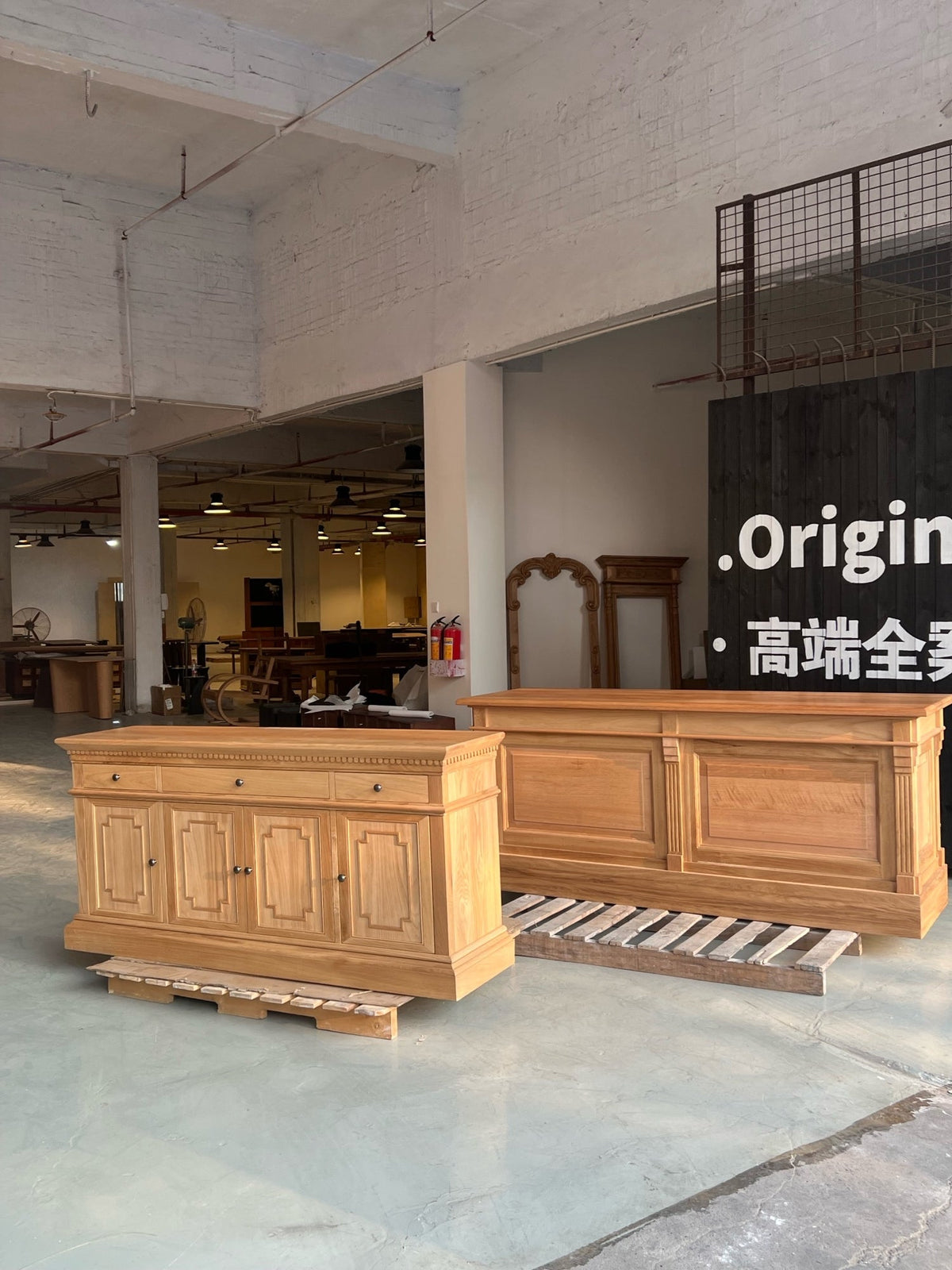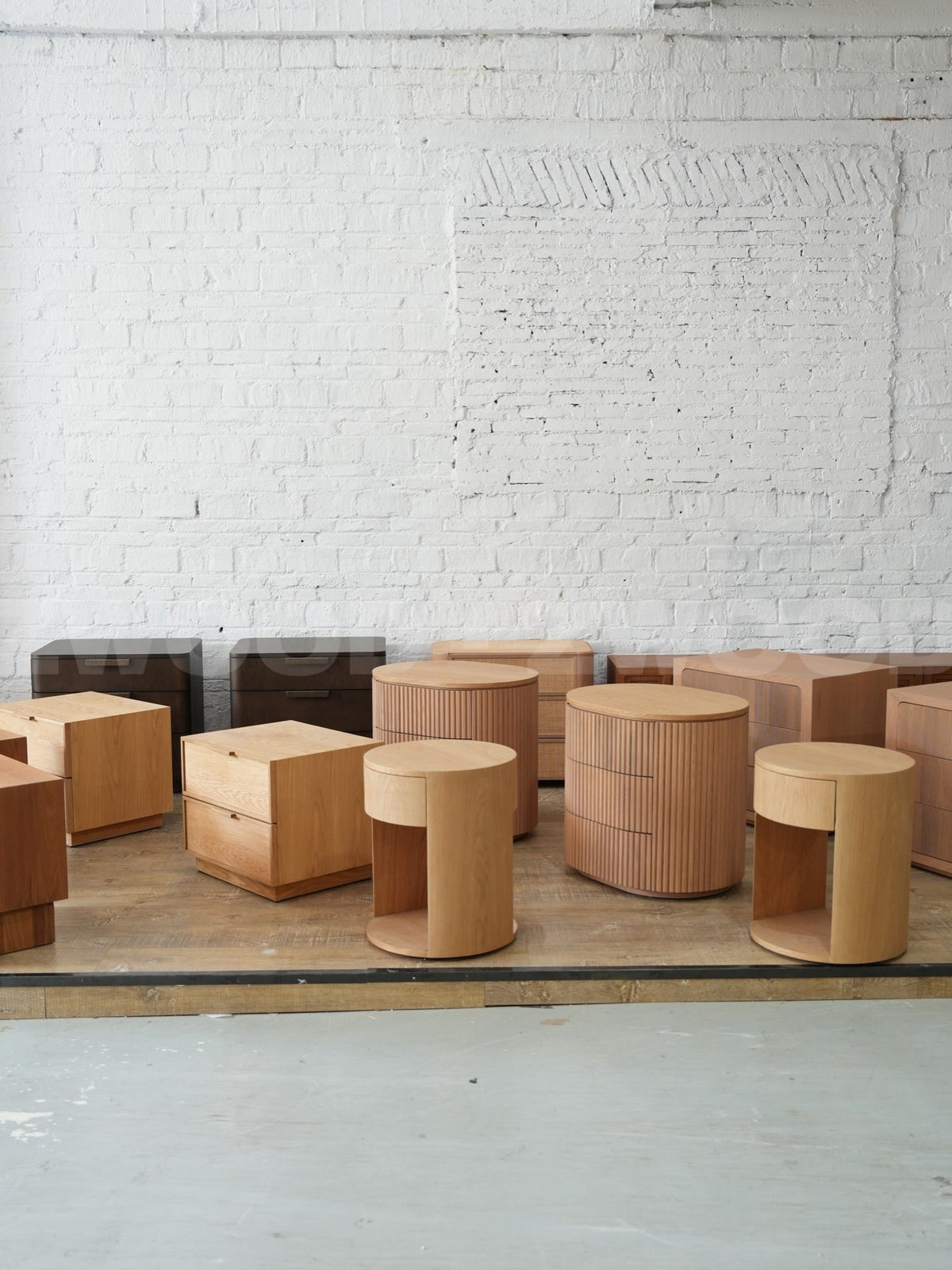
For overseas clients, interior designers, trading companies, and project buyers, choosing a furniture supplier often involves two important questions: can the company present products clearly, and can it actually manufacture them?
This is why operating with both a showroom and a factory creates a more complete furniture service model.
The showroom helps clients understand design, materials, finishes, and finished quality. The factory supports customization, production, quality control, and project execution.
Together, they make the entire process more transparent and efficient.
1. The Showroom Helps Clients Understand the Finished Product
Furniture is difficult to judge only through photos.
In a showroom, clients can directly see:
- Product proportions
- Wood grain
- Surface finishes
- Upholstery
- Hardware
- Construction details
- Overall craftsmanship
This is especially important for custom furniture because many details are difficult to evaluate accurately through online images.
Seeing real products helps clients make faster and more confident decisions.
2. Clients Can Compare Materials and Finishes in Person
A showroom also makes material selection easier.
Clients can compare:
- White oak
- Black walnut
- Ash wood
- Teak
- Veneer
- Fabric
- Leather
- Stone
- Metal finishes
- Paint colors
For custom projects, material differences can significantly affect the final result.
Seeing and touching samples in person makes it easier to confirm the right combination before production begins.
3. The Factory Shows Real Manufacturing Capability
A showroom can present finished products, but the factory shows how they are actually made.
Clients visiting the factory can understand:
- Material preparation
- Wood processing
- Assembly
- Sanding
- Painting
- Upholstery
- Quality inspection
- Packaging
This helps clients confirm that the supplier has real production capability rather than only displaying finished products.
For overseas buyers, this transparency is especially important before placing larger custom orders.
4. Custom Projects Can Be Discussed More Efficiently
When the showroom and factory are connected within the same business, communication becomes more efficient.
A client may first review a product in the showroom, then discuss modifications such as:
- Different dimensions
- Alternative materials
- Custom colors
- Structural changes
- Different hardware
- Functional requirements
The production team can evaluate these changes based on actual manufacturing conditions.
This reduces unnecessary communication between separate showrooms, agents, and factories.
5. Designers Can Move from Inspiration to Production More Easily
Interior designers often arrive with:
- Renderings
- CAD drawings
- Mood boards
- Product references
- Material samples
The showroom gives them a place to compare finishes and proportions, while the factory provides technical support for turning those ideas into manufacturable furniture.
This creates a smoother process from design concept to final production.
6. Quality Control Becomes More Transparent
Operating both a showroom and factory also helps create a clearer quality control process.
Clients can compare finished showroom samples with production items and confirm:
- Dimensions
- Color
- Surface finish
- Material quality
- Structural details
Before shipment, completed products can also be inspected against the confirmed requirements.
This is particularly useful for whole-home and commercial furniture projects.
7. It Is More Convenient for Overseas Clients Visiting Foshan
Many overseas clients come to Foshan specifically to source furniture.
A showroom allows them to review different products and materials efficiently, while the factory visit helps them understand production capability on the same trip.
Instead of visiting a showroom with no production connection and then searching separately for a manufacturer, clients can evaluate both design and manufacturing within one supplier relationship.
8. It Supports Both Individual Pieces and Complete Projects
A showroom-and-factory model works well for different types of orders.
For individual custom pieces, clients can use showroom products as references and adjust the specifications.
For larger projects, including:
- Villas
- Whole-home furniture
- Hotels
- Restaurants
- Clubs
- Commercial spaces
the factory can coordinate production across multiple furniture categories while the showroom helps with material and design confirmation.
9. Clients Get Both Design Experience and Factory Support
The showroom and factory serve different but connected purposes.
The showroom focuses on:
- Product presentation
- Design inspiration
- Material selection
- Client communication
The factory focuses on:
- Technical development
- Custom production
- Manufacturing
- Quality control
- Packaging
Combining both allows clients to move from selection to customization and production more efficiently.
Conclusion
We operate with both a showroom and a factory because custom furniture requires both product experience and real manufacturing capability.
The showroom helps clients understand design, materials, finishes, and finished quality, while the factory provides customization, technical development, production, and quality control.
For overseas homeowners, designers, trading companies, and project buyers, this model creates a more transparent and efficient process from the first product discussion to final delivery.