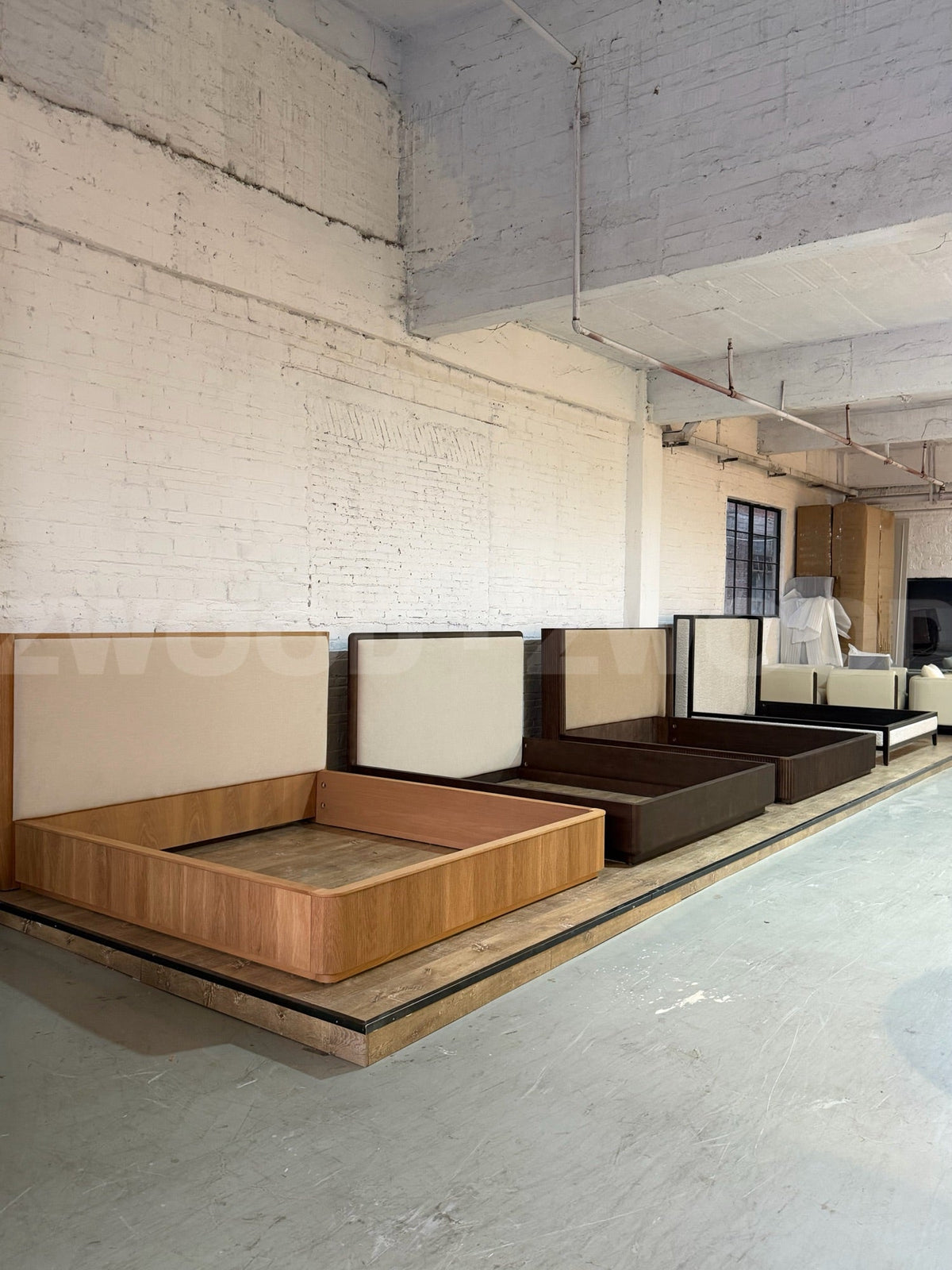
Many overseas buyers work with trading companies when sourcing furniture from China. In practice, trading companies often bring their clients directly to experienced furniture factories for showroom visits, production checks, material confirmation, and project discussions.
Why does this happen?
Because for custom furniture projects, especially high-end residential, villa, hospitality, and designer projects, the factory plays an important role in turning design ideas into real products.
1. Clients Want to See the Real Manufacturer
For overseas buyers, trust is very important.
Before placing a large furniture order, many clients want to confirm:
- Whether the factory really exists
- What products the factory can make
- How production is managed
- What materials are available
- How quality is controlled
A factory visit gives clients a more direct understanding of the manufacturing capability.
This also helps trading companies strengthen trust with their own clients.
2. Custom Furniture Requires Direct Technical Communication
Custom furniture usually involves many details, such as:
- Dimensions
- Materials
- Colors
- Finishes
- Structures
- Hardware
- Upholstery
- Functional requirements
For simple products, a trading company may handle communication independently.
For more complex customized projects, direct discussion with the factory can make the process much more efficient.
Designers and buyers can discuss their requirements directly with the production team, while the trading company continues to manage the overall client relationship and service process.
3. Factories Can Provide Better Product and Material Support
Experienced furniture factories usually have deeper knowledge of production details.
For example, when a client provides a reference image, the factory can help evaluate:
- Which wood species are suitable
- Whether solid wood or veneer is better
- How the internal structure should be made
- Which finish can achieve the desired effect
- Whether the original design needs technical adjustment
This helps trading companies provide more professional solutions to their clients.
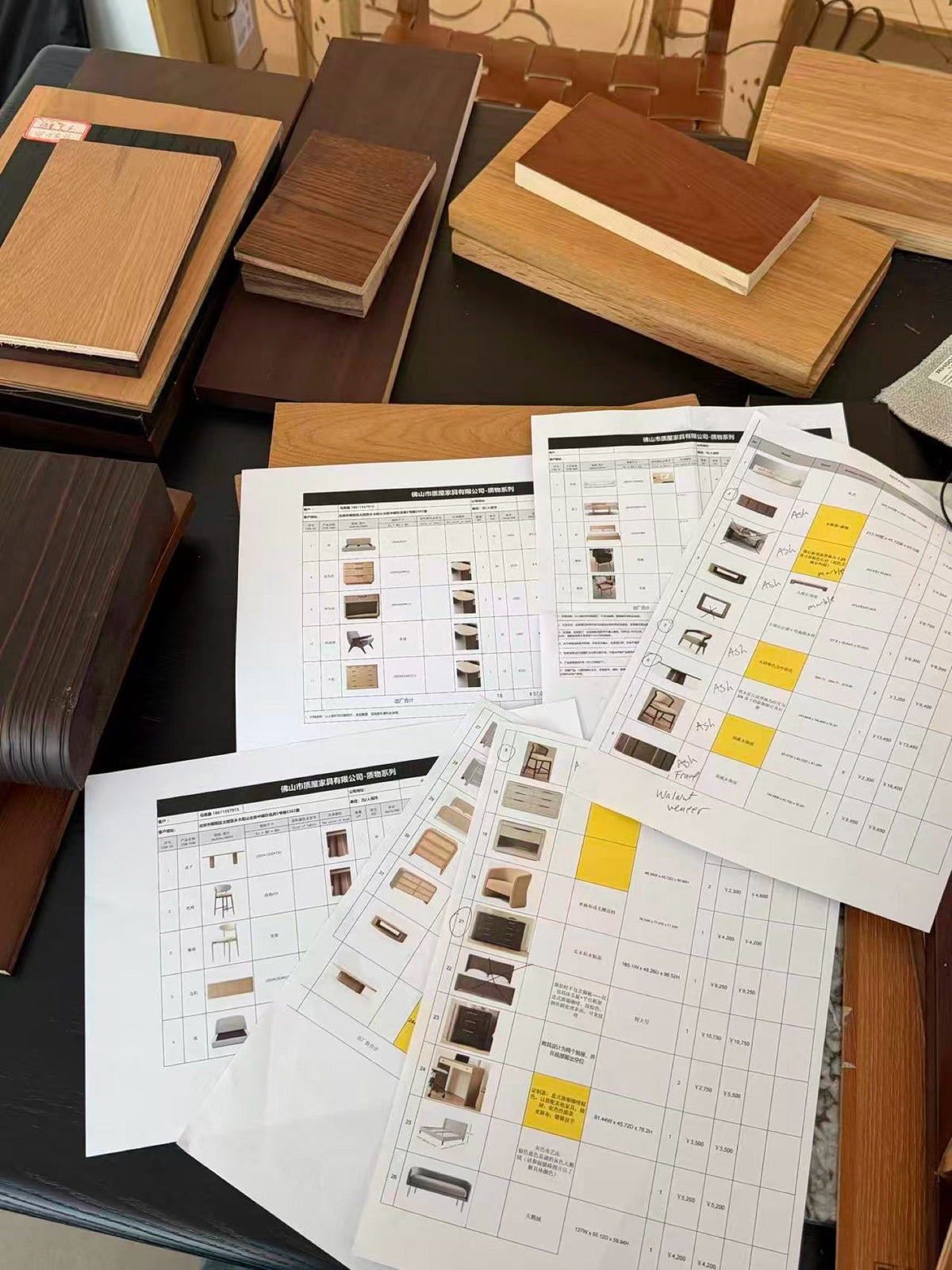
4. Clients Can Inspect Samples and Materials in Person
Another reason trading companies bring clients to factories is to confirm materials and finishes.
During a factory or showroom visit, clients can directly check:
- Wood samples
- Fabric
- Leather
- Stone
- Metal finishes
- Paint colors
- Hardware
- Finished furniture
Seeing and touching materials in person can make decisions much easier than communicating only through photos.
For custom furniture projects, this is especially important because color, texture, wood grain, and finishing quality can be difficult to judge accurately on a screen.
5. Factory Visits Help Buyers Understand Product Quality
Furniture quality is often determined by details that are difficult to see from product photos.
A client visiting the factory can better understand:
- Material quality
- Joinery
- Surface finishing
- Construction details
- Production standards
- Quality inspection process
This gives the buyer more confidence before placing an order.
For trading companies, bringing clients to a reliable factory also helps demonstrate that they have stable manufacturing resources behind their service.
6. Trading Companies Can Focus on Service While the Factory Focuses on Production
Trading companies and furniture manufacturers often play different roles in a project.
A trading company may handle:
- Client communication
- Product sourcing
- Project coordination
- Documentation
- Shipping arrangements
- Overall service
The factory focuses more on:
- Product development
- Technical drawings
- Material selection
- Manufacturing
- Quality control
- Production problem solving
When both sides cooperate well, the client receives a more complete service.
7. Complex Projects Need Strong Manufacturing Support
For a whole-home furniture project, hotel, restaurant, villa, or commercial space, the number of products can be large and the customization requirements can be complicated.
These projects may include:
- Dining tables
- Cabinets
- Beds
- Sofas
- Chairs
- Side tables
- Custom storage
- Special designer pieces
Trading companies often need factories with strong customization and production capabilities to support these projects.
Bringing the client directly to the factory allows all parties to confirm important details before production begins.
8. A Reliable Factory Helps Trading Companies Serve Clients Better
For trading companies, choosing the right factory is also part of their service capability.
A reliable manufacturer can help them:
- Respond to technical questions faster
- Provide more accurate quotations
- Develop customized products
- Control production quality
- Handle project changes
- Improve delivery efficiency
This is why some trading companies build long-term relationships with experienced furniture manufacturers instead of changing suppliers frequently.
Conclusion
Trading companies bring their clients to furniture factories because factory visits can improve trust, communication, material confirmation, technical support, and quality control.
For custom furniture projects, cooperation between the trading company and manufacturer can make the entire process more efficient.
The trading company provides client service and project coordination, while the factory provides manufacturing knowledge, customization capability, and production support.
For overseas buyers, this cooperation can provide a clearer and more reliable path from design concept to finished furniture.